

When The Vessel Speaks

How we use the science of crossmodal perception to create the perfect plate for a dish
Have you ever thought about that moment between the plate being set down in front of you and your first bite? Rarely, right. Because it is a pause so brief we barely register it. And yet, in that fraction of a second, the brain is not idle. It is already tasting.
The colour of the ceramic, the weight in the hand, the rough clay at the unglazed rim: all of it is being processed and converted into a prediction about what the food will taste like.
Long before a single flavour molecule reaches the tongue, expectations are forming.
And expectations are not neutral. They shape the experience itself.
Sounds poetic, doesn’t it? But it is poetry backed by the well-documented science of crossmodal correspondences – the systematic associations the brain makes between stimuli from different senses. It has been studied for over fifty years. It explains why coffee from a white cup tastes more bitter than coffee from a cream one, why beer from a curved glass seems more fruity than beer from a straight one, why a heavier wine glass makes the wine inside it seem better.
The Material Language of Taste
At Pottery & Poetry, we have spent the past six years designing vessels for Michelin-starred and fine dining restaurants. In that process, something became impossible to ignore: the material decisions – clay, glaze, texture, form – were affecting not just how the food looked, but the taste itself.
That observation sent us into the academic literature: into the work of Prof. Charles Spence at Oxford’s Crossmodal Research Laboratory, into Fabiana Carvalho’s studies on coffee cup shape and flavour, into Francisco Barbosa Escobar’s research on visual textures and taste, into Thomas van Rompay’s findings on rough ceramic surfaces and perceived saltiness. What emerged was a framework we call Material Language of Taste – a systematic mapping of ceramic properties to flavour signals. This article is about two plates made for Materia Mensa, where the collaboration between a chef and a ceramic artist explores the connections between food, vessel, and place. Two dishes. Two radically different terroirs. Two very different conversations in clay.
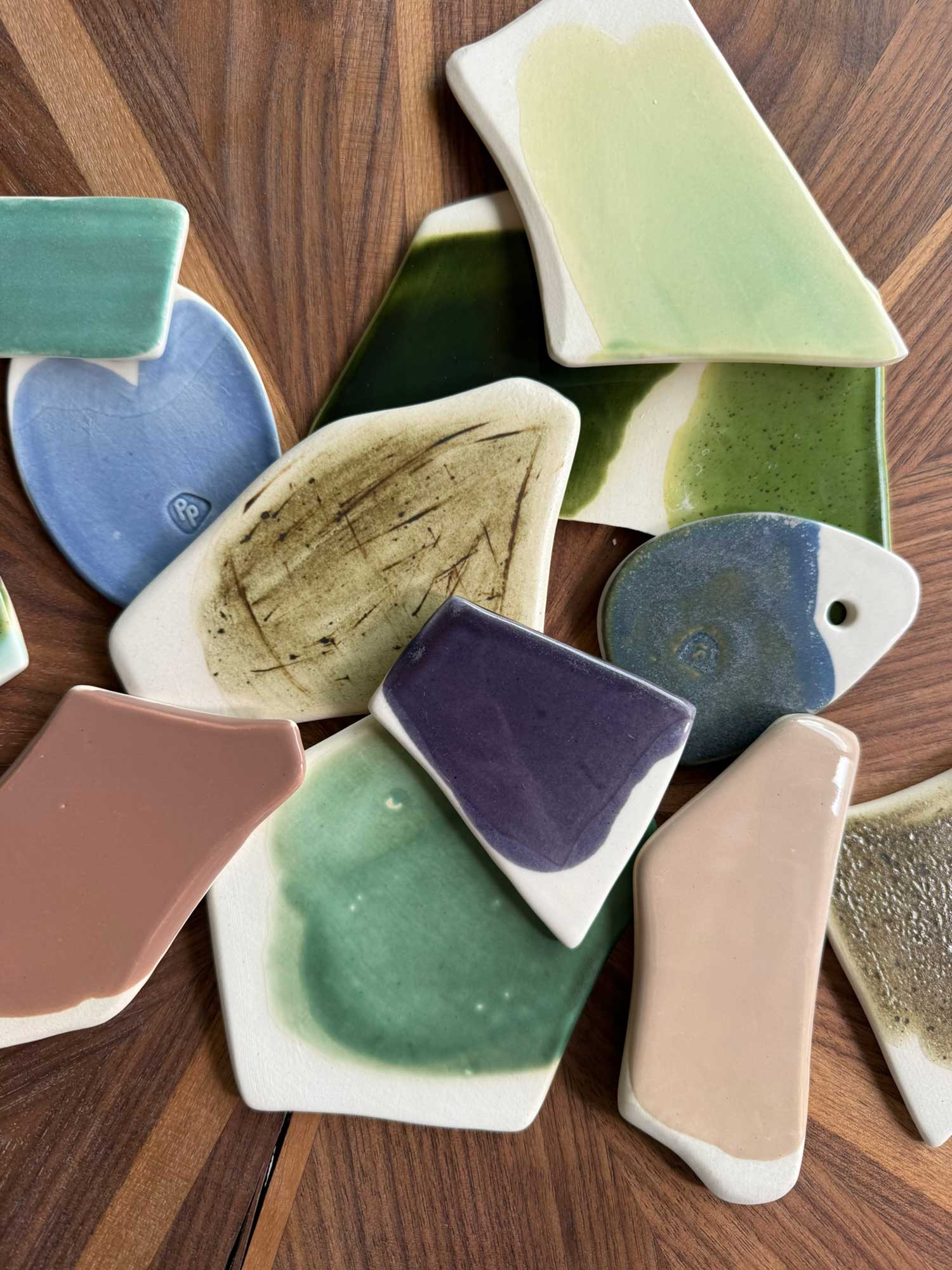
Plate One: The Rhodopean Trout
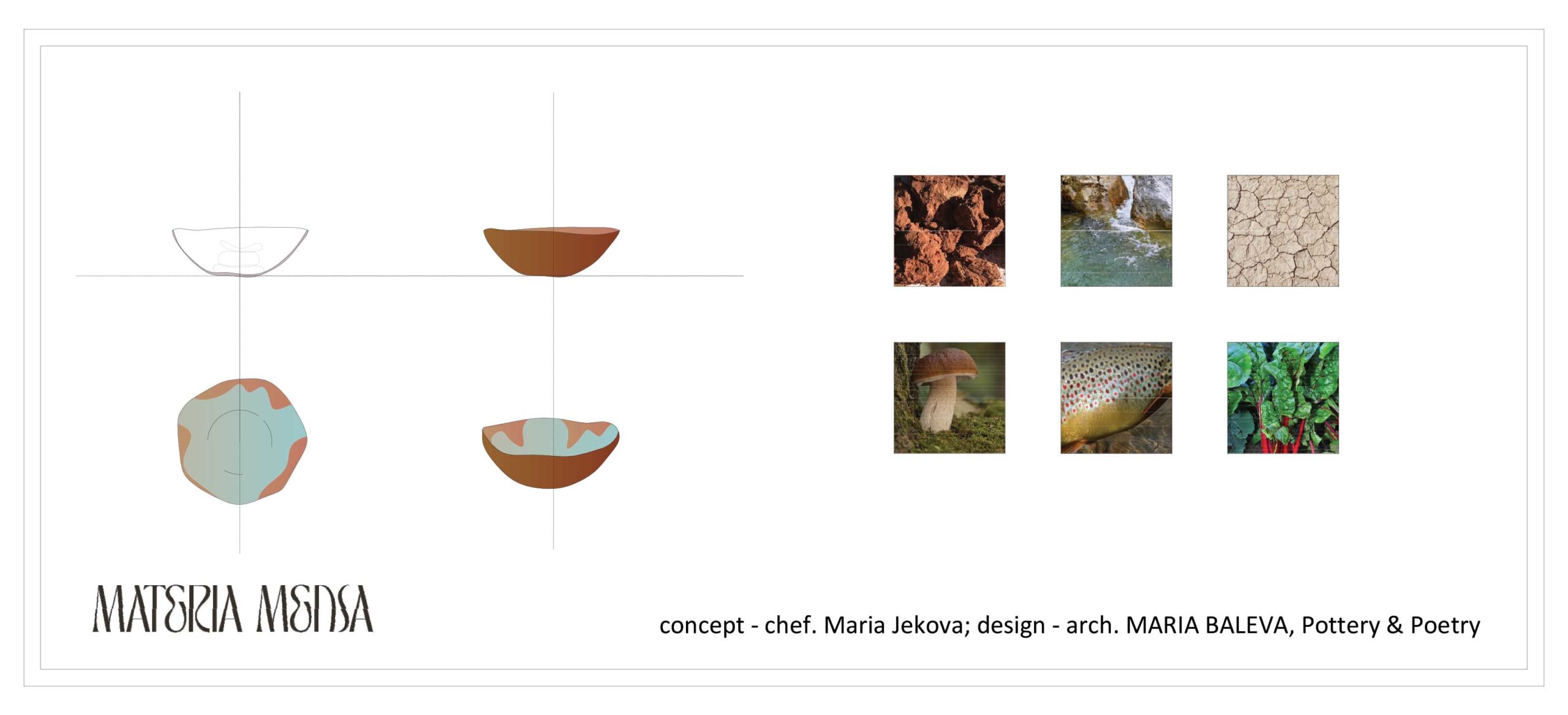
The first plate was made for chef Maria Jekova for a dish of wild Rhodopean trout with boletus risotto, boletus purée, and leaf beet sorrel. The setting was a village high in the Rhodope Mountains – a landscape of cold turquoise rivers, dense forest, wild mushrooms, ancient soil. The dish was a portrait of that place.
The dish carries three distinct flavour layers: the mild acidity and delicacy of the trout; the deep umami of mushrooms in two forms; the bright, slightly bitter finish of the leaf beet sorrel. If the dish carries the taste of the terroir, the plate should visually resemble the origin of the recipe.
Form: Asymmetry in Service of the Finish.
The body is a shallow, wide bowl. Rounded forms signal sweet and umami – correct for the risotto and purée. The wide opening allows the complex mushroom aromas to breathe rather than be trapped.
Colour and Glaze: The River in the Forest
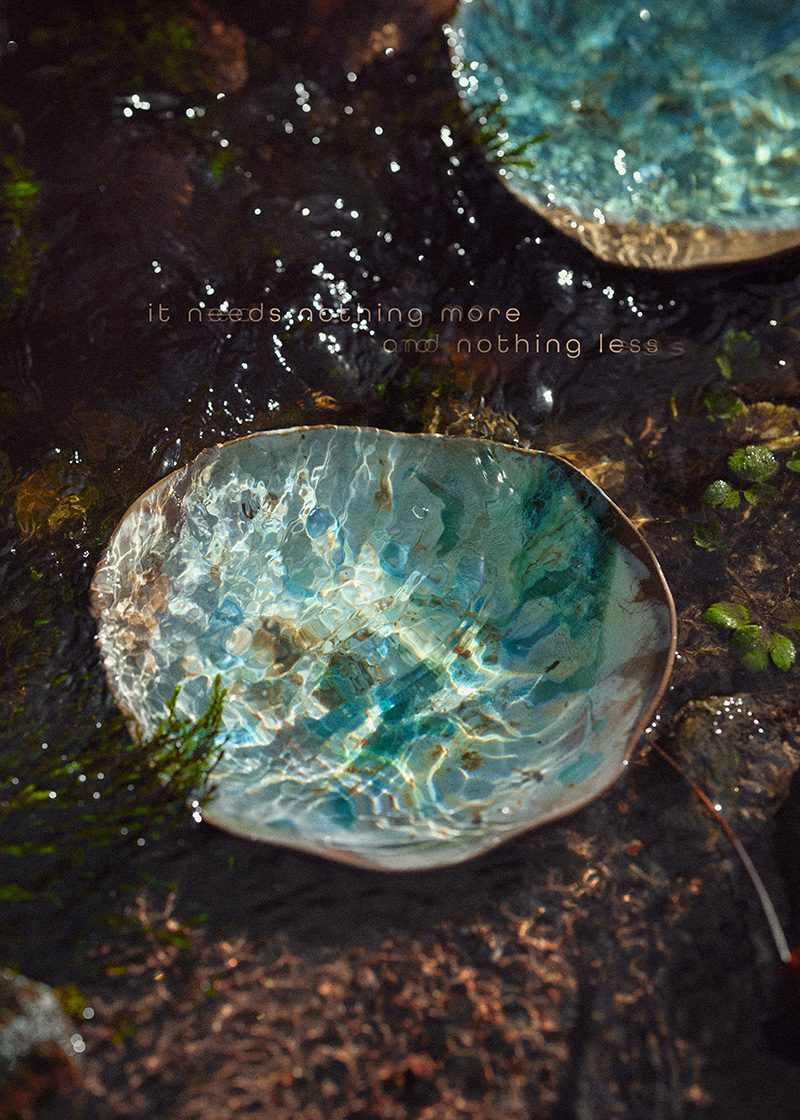
The dominant colour is turquoise-blue – the only colour in crossmodal literature that does not directly amplify a specific flavour. Here it is not blue in isolation. It is blue in motion over ochre and gold, resembling a river moving through the forest.
The ochre and gold in the glaze are functionally precise. Ochre and rusty brown are the strongest umami colours in the literature – embedded not as decoration but as direct crossmodal correspondence: the golden patches speak the same language as the mushrooms and the purée. Visually, they resemble both dry soil and a fish skin.
Material and Texture: Bulgarian Red Clay as Terroir
This is the strongest decision in the design, based on what Prof. Spence frames as ‘material narrative’. The clay does not merely carry form and glaze. The vessel does not represent the Rhodopes. It is made from them.
Inside, the surface is smooth to semi-matte – smooth surfaces reduce perceived acidity and retain sweetness and umami signals, appropriate for the tender risotto and silky purée. Outside, the surface is unglazed, rough Bulgarian red clay. When a guest lifts this plate, they feel the raw earth against their palm. Before the food is tasted, the hands have already received a signal: this is a dish from the ground, from the forest, from the Rhodopes.
This is the congruence principle applied across senses: the tactile signal on the outside and the flavour profile on the inside say the same thing in different sensory languages.
The System as a Whole
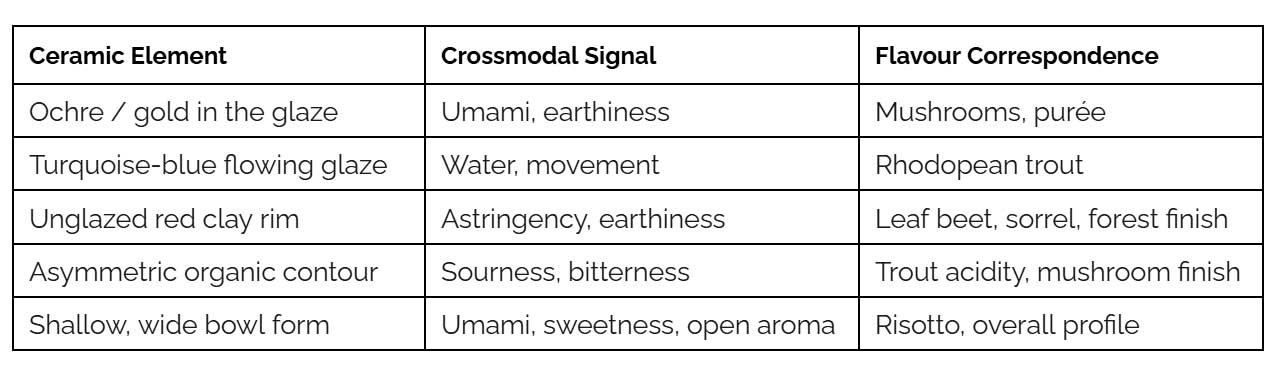
Table 1. The five simultaneous crossmodal signals in the Materia Mensa Episode 1 plate.
Plate Two: The Chicken Returns to the Egg
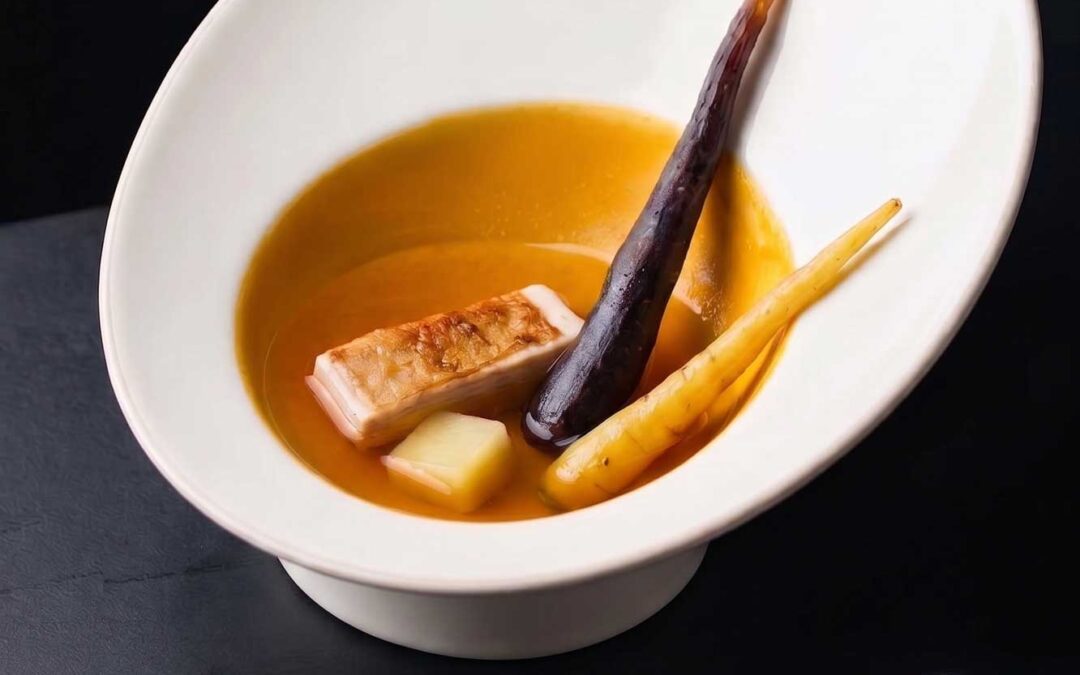
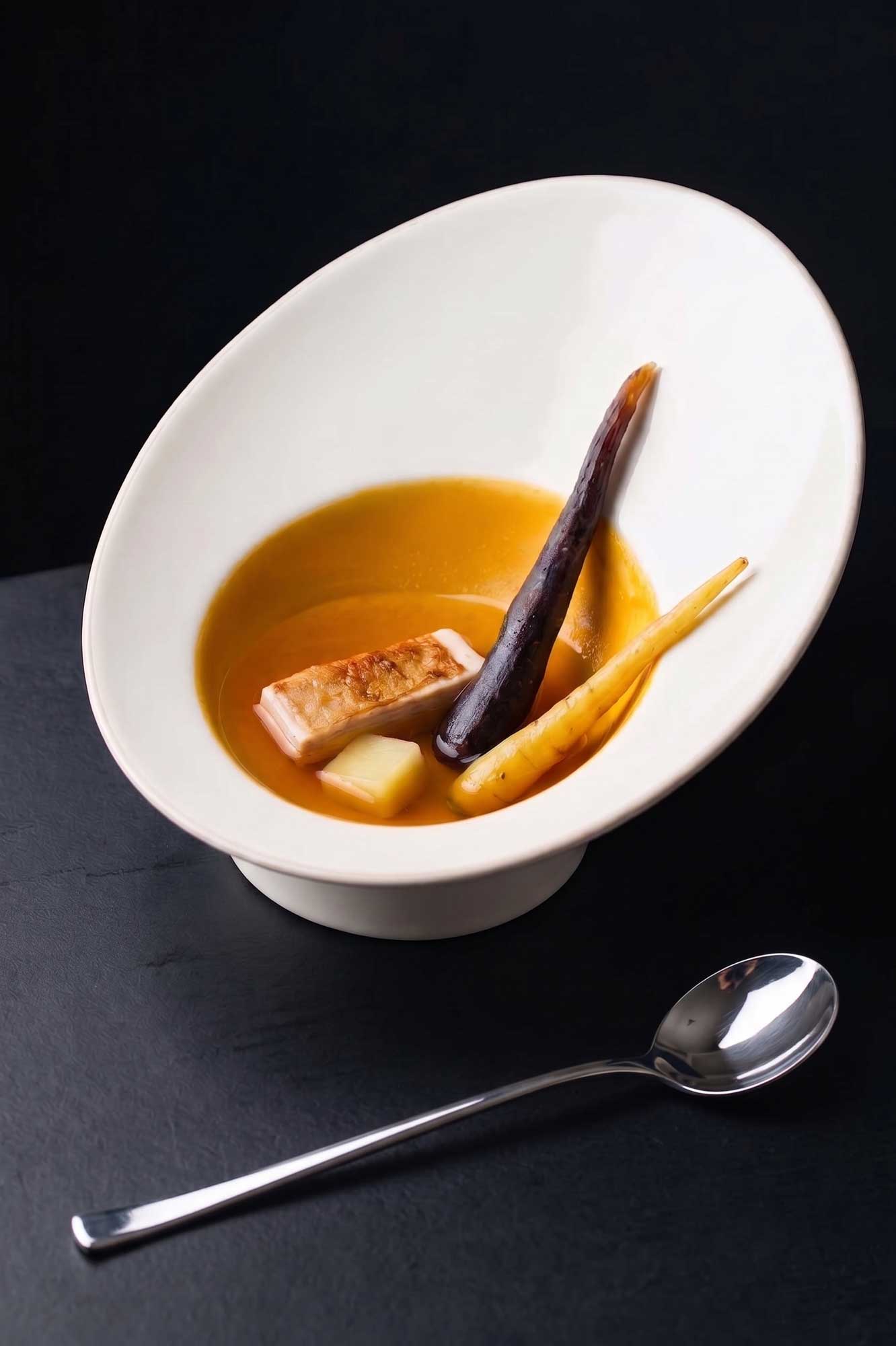
The second plate presents a fundamentally different challenge and a fundamentally different solution. Made for the duo Amor y Sal for their dish of crystal-clear chicken broth with gently steamed vegetables. This vessel confronts one of the most counterintuitive problems in crossmodal plate design: how to make something transparent look rich.
The dish’s concept – ‘the chicken returns to the egg’ – is not merely poetic. It is a precise crossmodal mechanism.
Form: The Egg as a Sensory Primer
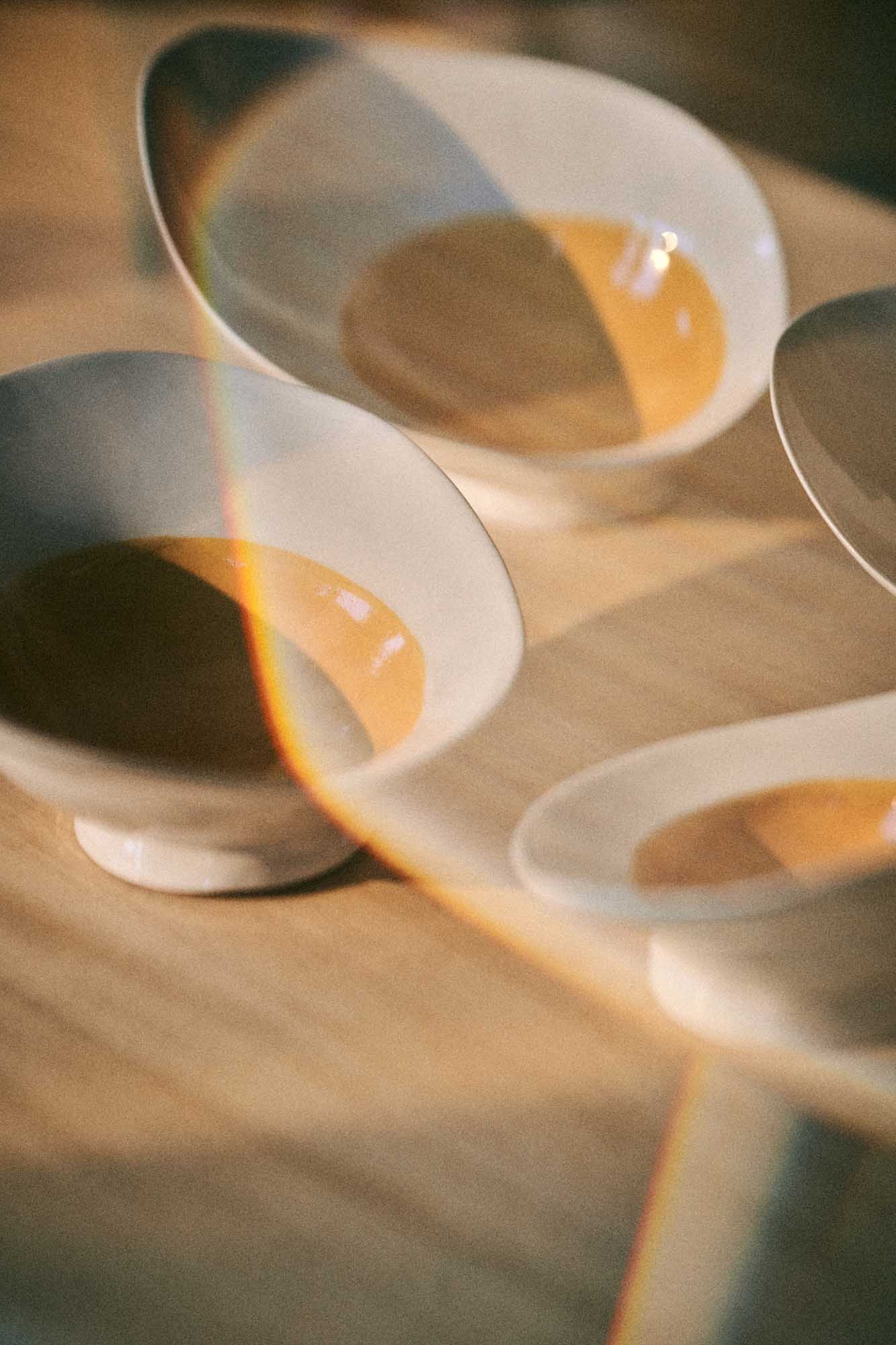
The vessel is an egg in cross-section: a spherical body elongated asymmetrically to a sharp tip, set on a low pedestal. Two geometric logics coexist in one object.
The spherical body is the strongest shape in the crossmodal literature for signalling sweet and umami, corresponding precisely to the nourishing, comforting character of the broth. The sharp tip is the only angular element in an otherwise entirely rounded form – sufficient to communicate brightness and precision without disturbing the overall sense of gentleness: the clean, clear finish of the broth.
The pedestal adds two signals: greater perceived weight and elevation from the table, which turns the dish into an object of observation before consumption. The guest looks down into the egg.
Colour: Correcting a Perceptual Error
The chef’s concept required a crystal-clear broth so the preserved colours of the steamed vegetables would stand out. But transparent liquids read as watery and nutritionally insufficient – a perfectly executed, deeply nourishing consommé is visually fighting against the expectation it needs to create.
The warm white of the porcelain signals saltiness – the right choice for a salty-umami dish. But white alone would deepen the problem, making the clear liquid look even more watery.
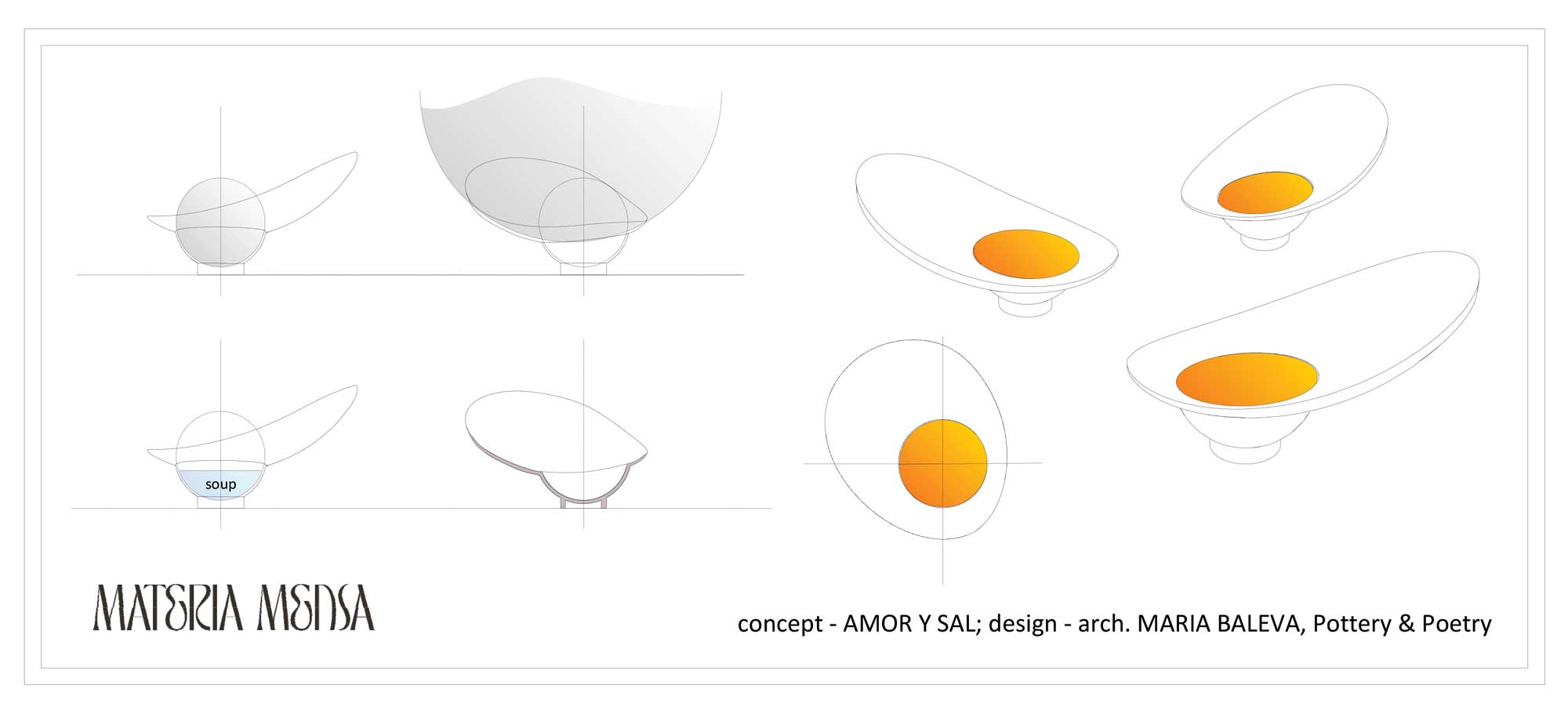
The Indian yellow at the core of the vessel solves this precisely. Ochre and saturated yellow are the strongest umami colours in the literature. When the broth is poured over the yellow core, the colour passes through the transparent liquid. The brain reads density and nourishment, despite the liquid being clear.
The vessel is not complementing the broth. It is rewriting its perceptual message.
And there is a third dimension to the yellow – the most literal and therefore the most powerful. Before the brain processes ‘ceramic’ or ‘glaze,’ it processes ‘egg.’ The recognition happens in milliseconds, before language. The vessel is the egg. The broth is what was inside it.
Texture: Working Through Absence
The System as a Whole
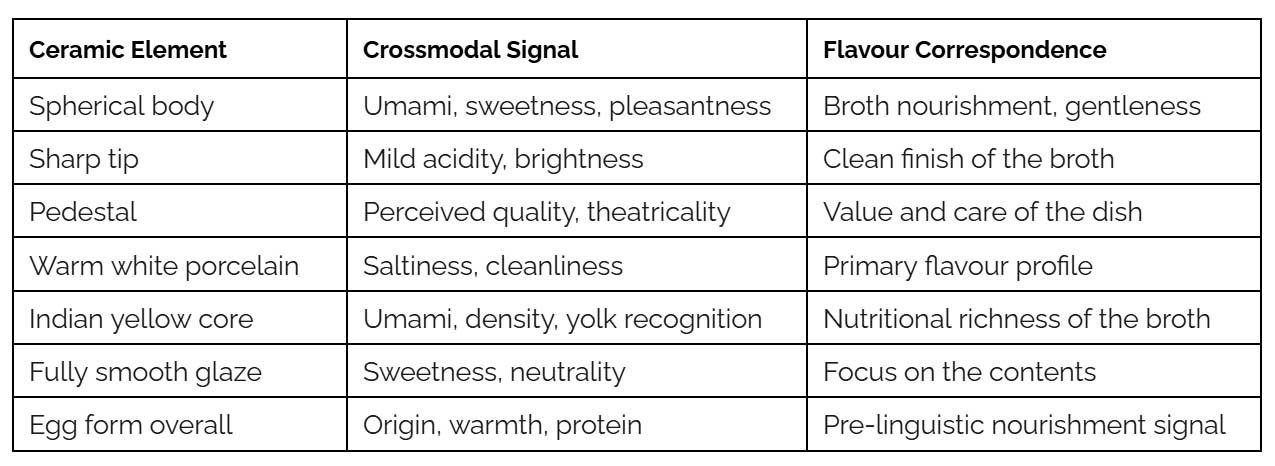
Table 2. The multi-signal crossmodal system of the Materia Mensa Episode 2 vessel.
The Plate Is Already Speaking
Most of us have never been told that a ceramic vessel can taste of something. Yet we have all felt it – the slight shift in experience when a meal arrives in heavy stoneware versus thin white china. The way a dark bowl makes food seem more serious. The way a rough-edged plate makes wine feel drier. We register these signals instinctively, without knowing why.
The science gives a name to what we already sense: crossmodal correspondences. Our brains constantly translate signals from one sense into predictions about another. We cannot switch this off. It happens before we choose it, faster than thought.
For these two plates, every decision was made with that translation in mind. Materia Mensa began as a question: what happens when a chef and a ceramicist ask together what the plate should say about the dish? The answer is that when vessels are made with care, knowledge, and a deep respect for the place a dish comes from, they tell the story of the meal before it begins.
text: Nadya Zdravkova, key partners & new business @potteryand poetry;
plates design and craftsmanship: arch. Maria Baleva, founder and chief designer
photo credit: Simeon Levi for Materia Mensa
All items are conceived, designed and produced in our atelier.